The Fountains

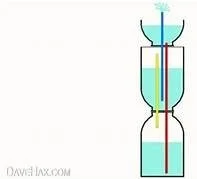
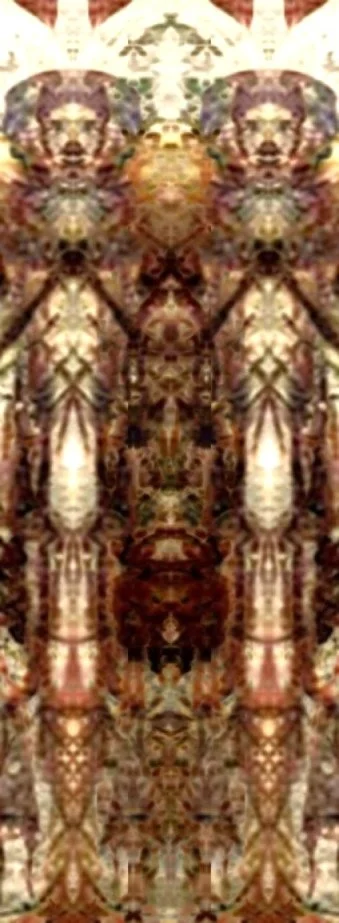
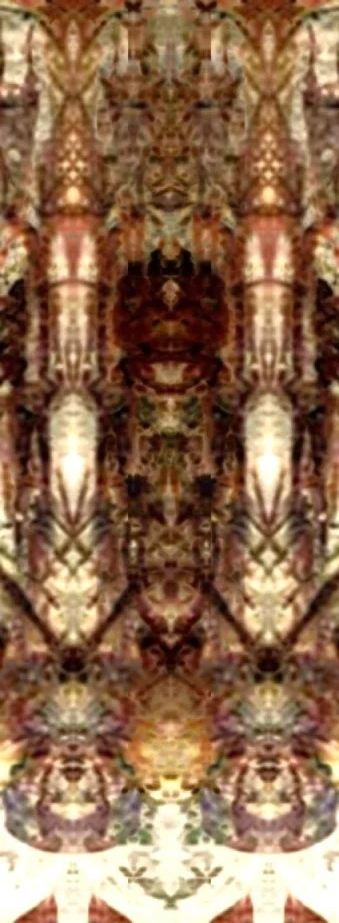
Notice the two columns: rightside up, these are Heron Fountains, featured here as an allegory to Judeo-Christianity. Heron’s invention has three sections - two lower, airtight capsules, and one open section which is where water shoots up and is collected in a dish, then drained down directly to the lower capsule. From the lowest capsule, a tube draws water up into the second area, and from there, a third tube draws water up into the top. The water is “drawn up” by the principal of air displacement, and “priming the pump” is required to get it started, which is just turning it upside down and back up again.

For the narrative, Heron stationed Prophets at each section - Isaac is the lowest section, Moses in the middle, and Jesus at the top. Heron is saying that God taught Isaac “how to be good,” taught Moses “how to not be bad,” and finally installed Jesus as the path to an automatic ascension from the second chamber. Heron is saying it is not enough to just be good, ascension necessarily requires learning by experience how to not be bad. There must be real repentance to ask for forgiveness, the pump must get primed.

He is also demonstrating that ascension is not first-come, first-served. As a drop of water enters the second chamber, it could be there for a while before it gets moved up. In counter, a drop of water might move up very quickly, but purely by chance.

Shooting water from the top of the fountain is also a way to shake out extra electrons from water. The electrons float up and seek combinations above the tertiary world, in clouds or vapor, or they might become lightning - even super lightning, which takes them into space! Applying one electron theory into this idea, things get interesting.

Are the Fountains Filled With Water?

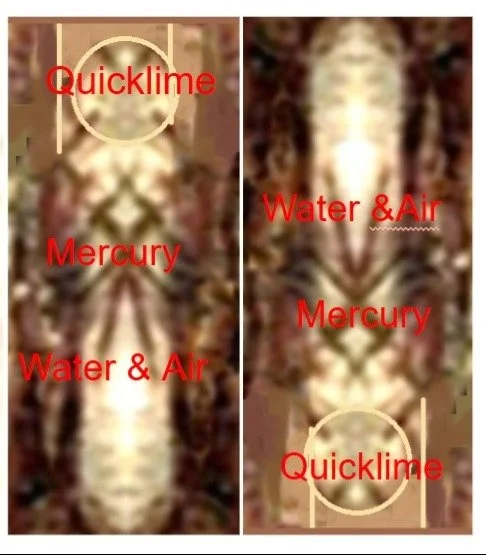
The stage can turn upside down, but is this on behalf of the fountains? Only in allegory. The fountains are not really filled with water, as not all chambers are glass tubes. The airtight, glass tubes are the gridded area, which might be filled with mercury; and the tube on top, which might be water, and these sections might be connected. There is also air in the chamber, but more importantly the water keeps the mercury stable. As the machine is rotated, the water stays on top of the mercury.

Mercury and water creates a glowing special effect to enhance the storytelling. When mercury is heated, is has a soft glow, which is shared into the water to illuminate the whole section.

The second section is fabric - the pleated areas are empty, and the red-painted chambers hold scented spices and organics that, when heated, are released from small tubes.

The topper fishtails are made of woven metal, and they contain the heating element in the sphere, maybe a small candle nests on a platform between the sections. They might also contain organics to create scents as the story progresses.

Notice the beautifully described dimension at the bottom of the pillowy-pleated fabric, and how it appears to extend further out than the glass tubes, but not necessarily the grid. This tells us that the tubes might be flat-faced, and the grid a separate feature that extends even further out. Structurally, the grid makes a fence to support other fixtures as required, such as a flap that hides a central cubby, creating a surprise mini stage.

The stage can collapse accordion style in front of the fountains, obscuring them. The fish get pushed convex, and the grid comes together, the fountains are hidden.